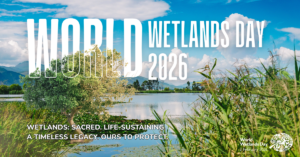
World Wetlands Day, observed annually on 2 February, marks the adoption of the Ramsar Convention on Wetlands (1971). In recent years, wetlands have increasingly been described as “National Public Goods”, highlighting their shared benefits and the need for collective responsibility in their conservation.
For UPSC and KAS aspirants, this topic is important under Environment & Ecology, Governance, Economy (Public Goods), and International Conventions.
Under the mentorship of Dr. Ramanna Gowda, we have broken down the core differences that every aspirant must know for the upcoming KPSC and UPSC mains.

Observed on 2 February
Commemorates the signing of the Ramsar Convention in Iran
Aims to raise awareness about:
Wetland conservation
Sustainable use of wetland resources
Role of wetlands in climate resilience
Each year focuses on a theme linking wetlands to development and sustainability.
Wetlands are areas where water is the primary controlling factor of the environment, such as:
Marshes
Lakes and ponds
Floodplains
Mangroves
Estuaries
They act as a bridge between land and water ecosystems.
A public good is defined by two characteristics:
Non-excludability – No one can be excluded from using it
Non-rivalry – One person’s use does not reduce availability to others
Examples include clean air, national defence, and public parks.
When public goods generate benefits across the entire nation, they are termed National Public Goods.
Wetlands qualify as national public goods because:
Absorb excess rainfall
Reduce flood intensity downstream
Protect lives and infrastructure
Filter pollutants naturally
Improve water quality for communities
Support migratory birds, fish, and aquatic plants
Preserve genetic diversity
Act as carbon sinks
Moderate local climate
Enhance climate resilience
Fisheries
Agriculture
Eco-tourism
These benefits extend beyond local users, serving society at large.
Recognising wetlands as national public goods:
Justifies state intervention and regulation
Encourages public funding for conservation
Strengthens legal and policy protection
Promotes inter-state and inter-agency coordination
It shifts wetland management from private exploitation to collective stewardship.
Ramsar Convention signatory (since 1982)
Wetlands (Conservation and Management) Rules
National and State Wetland Authorities
Expansion of Ramsar sites network
World Wetlands Day reinforces India’s commitment to these efforts.
Date and significance of World Wetlands Day
Ramsar Convention facts
Public goods definition
GS Paper III: Environment, ecology, climate change
Wetlands as public goods and governance implications
Role of international conventions in conservation
Why environmental resources need public policy support
Balancing development and conservation
Encroachment and urbanisation
Fragmented governance
Lack of community awareness
Inadequate enforcement
Integrate wetlands into urban and regional planning
Strengthen community participation
Use economic valuation of ecosystem services
Promote awareness through platforms like World Wetlands Day
World Wetlands Day provides an opportunity to reframe wetlands as National Public Goods—resources that support ecological balance, economic stability, and human well-being. For civil services aspirants, this concept helps connect environmental conservation with governance and economic theory, a multidimensional approach essential for high-quality answers.
Understanding wetlands through this lens reinforces the idea that protecting nature is not optional but a collective national responsibility.
Stay updated with the latest in Indian Governance and Economy. Our classroom programs and test series are meticulously updated to include these recent legislative changes.
Visit us: www.amoghavarshaiaskas.in
Expert Mentorship: Dr. Ramanna Gowda
Call for Admissions: +91 9916766911
Location: Bangalore, Karnataka.
Maximize the benefits of mock tests for IAS and KAS preparation with guidance from Amoghavarsha IAS Academy . For more details, visit https://amoghavarshaiaskas.in/.
Youtube: click here


Amoghavarsha IAS/KAS Academy was founded in 2014 since from their we have been excellence in the field of civil Service examination preparation and state services. The Academy is completely dedicated to provide excellent quality education by experts and bringing innovations etc.
Copyright © 2014 – 2024 Amoghavarsha IAS Academy. All Rights Reserved
Developed & Maintained by BIGGSITE– Manikanta G.V
Amoghavarsha E Magazine
Current Affairs ( Prelims )
UPSC
KPSC