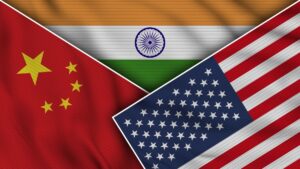
India–U.S. relations are entering a phase of trade reset, shaped significantly by global geopolitical shifts and the growing influence of the “China factor.” As the world’s two largest democracies recalibrate economic and strategic ties, trade cooperation is increasingly driven by concerns related to supply chain resilience, strategic autonomy, and geopolitical competition.
For UPSC and KAS aspirants, this topic is crucial under International Relations, Indian Economy, and Global Governance.
Under the mentorship of Dr. Ramanna Gowda, we have broken down the core differences that every aspirant must know for the upcoming KPSC and UPSC mains.
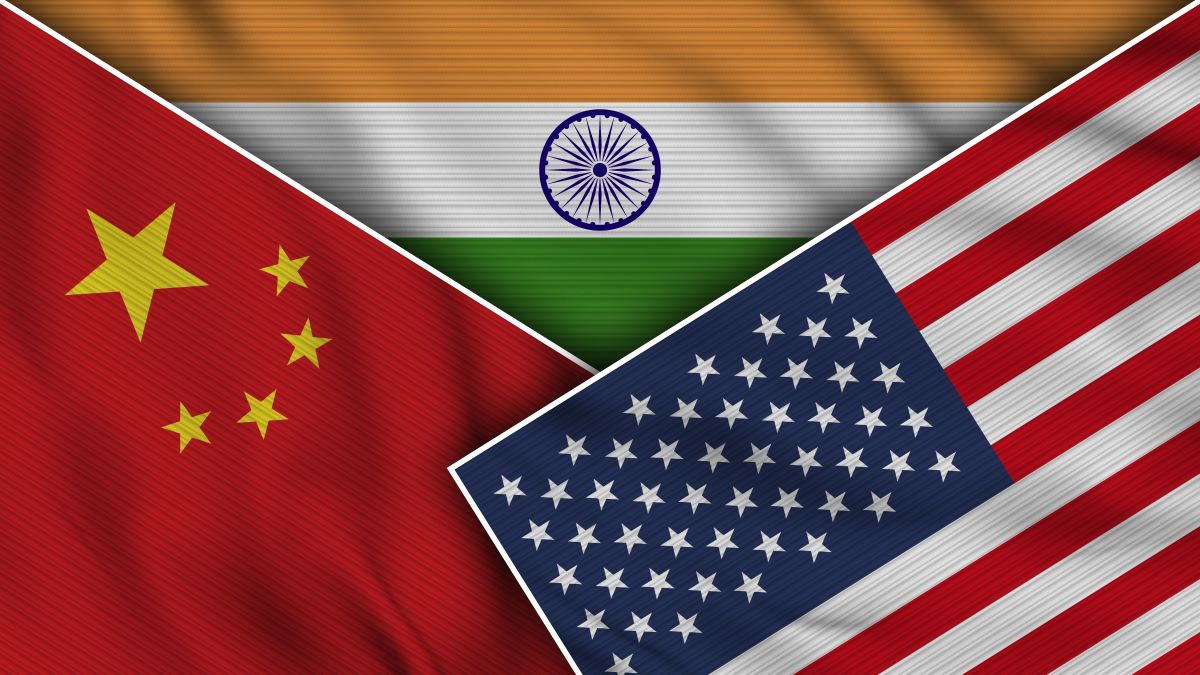
A “trade reset” refers to efforts by both countries to:
Resolve longstanding trade frictions
Expand bilateral trade and investment
Align economic ties with strategic objectives
Reduce dependence on adversarial supply chains
The reset goes beyond tariffs and market access, focusing on technology, critical minerals, manufacturing, and services.
The China factor refers to China’s dominant position in:
Global manufacturing
Supply chains for electronics, pharmaceuticals, and rare earths
Strategic trade and technology sectors
Rising U.S.–China strategic rivalry has pushed countries like the U.S. to diversify trade partners, creating new opportunities for India.
The U.S. seeks alternatives to China-centric supply chains
India is positioned as a trusted manufacturing and services hub
Focus on electronics, semiconductors, pharmaceuticals, and defence production
Trade is increasingly linked with:
Indo-Pacific strategy
Economic security
Trusted partner frameworks
India–U.S. trade is thus becoming strategy-driven, not purely market-driven.
Cooperation in semiconductors, AI, clean energy, and defence
Reduced dependence on Chinese technology ecosystems
Emphasis on trusted digital and industrial ecosystems
The trade reset creates multiple opportunities:
Increased foreign direct investment (FDI)
Integration into global value chains
Boost to domestic manufacturing under Make in India
Job creation and skill development
India’s large market, democratic institutions, and strategic location strengthen its position.
Despite convergence, challenges remain:
Market access issues
Regulatory and compliance differences
Intellectual property concerns
India’s need to balance strategic autonomy
India must ensure that diversification away from China does not lead to over-dependence on any single partner.
India’s approach reflects:
Engagement with the U.S. without formal alliances
Continued economic ties with China where necessary
Emphasis on multi-alignment and national interest
This balancing is central to India’s foreign economic policy.
India–U.S. trade basics
Indo-Pacific strategy
Global supply chain concepts
GS Paper II: India–U.S. relations, geopolitics
GS Paper III: Trade, manufacturing, global value chains
Answer enrichment using the “China factor” lens
Trade vs strategic autonomy
Managing great power competition
India’s role in a multipolar world
Strengthen domestic manufacturing capacity
Improve ease of doing business
Invest in technology and skills
Maintain strategic autonomy while deepening partnerships
The India–U.S. trade reset, shaped by the China factor, reflects the changing nature of global trade where economics and geopolitics are deeply intertwined. For India, this moment offers both opportunity and responsibility—to integrate into global supply chains while safeguarding national interests.
For civil services aspirants, this topic provides a powerful framework to analyse contemporary international relations through an economic and strategic lens, essential for high-scoring answers.
Stay updated with the latest in Indian Governance and Economy. Our classroom programs and test series are meticulously updated to include these recent legislative changes.
Visit us: www.amoghavarshaiaskas.in
Expert Mentorship: Dr. Ramanna Gowda
Call for Admissions: +91 9916766911
Location: Bangalore, Karnataka.
Maximize the benefits of mock tests for IAS and KAS preparation with guidance from Amoghavarsha IAS Academy . For more details, visit https://amoghavarshaiaskas.in/.
Youtube: click here


Amoghavarsha IAS/KAS Academy was founded in 2014 since from their we have been excellence in the field of civil Service examination preparation and state services. The Academy is completely dedicated to provide excellent quality education by experts and bringing innovations etc.
Copyright © 2014 – 2024 Amoghavarsha IAS Academy. All Rights Reserved
Developed & Maintained by BIGGSITE– Manikanta G.V
Amoghavarsha E Magazine
Current Affairs ( Prelims )
UPSC
KPSC