
Judicial Activism: Menstrual Health as a Fundamental Right
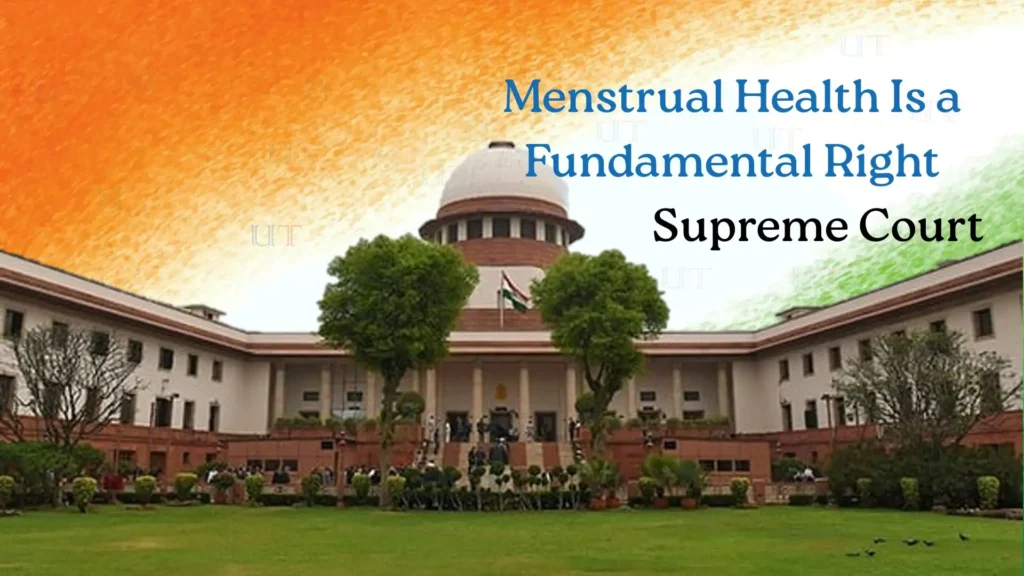
Introduction In recent years, Indian courts have increasingly addressed issues of menstrual health, dignity, and access to hygiene, marking an important phase of judicial activism. By interpreting constitutional provisions expansively, the judiciary has contributed to recognising menstrual health as an integral part of fundamental rights, especially the Right to Life and Dignity under Article 21. […]
India–U.S. Trade Reset and the China Factor Explained
Introduction India–U.S. relations are entering a phase of trade reset, shaped significantly by global geopolitical shifts and the growing influence of the “China factor.” As the world’s two largest democracies recalibrate economic and strategic ties, trade cooperation is increasingly driven by concerns related to supply chain resilience, strategic autonomy, and geopolitical competition. For UPSC and […]
World Wetlands Day & National Public Goods Explained
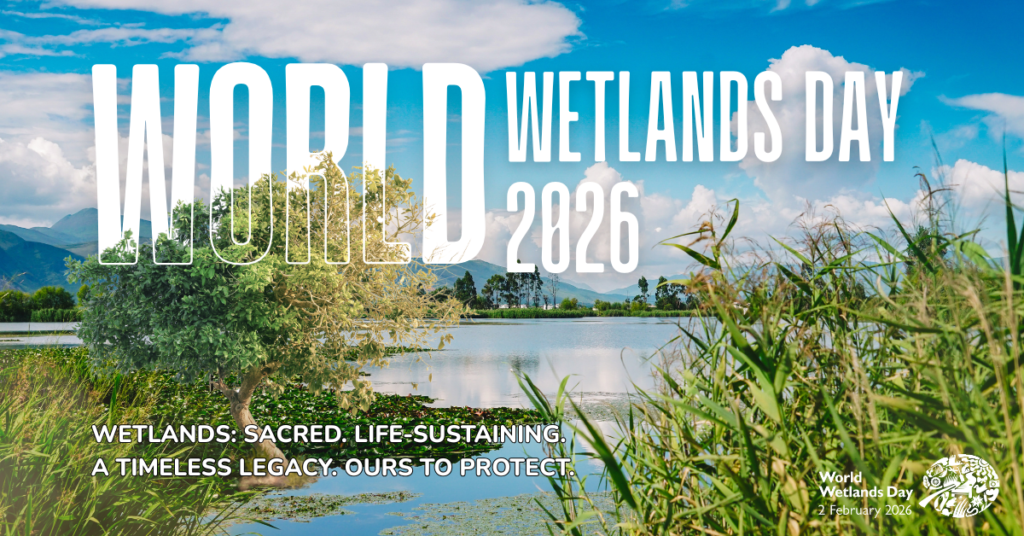
Introduction World Wetlands Day, observed annually on 2 February, marks the adoption of the Ramsar Convention on Wetlands (1971). In recent years, wetlands have increasingly been described as “National Public Goods”, highlighting their shared benefits and the need for collective responsibility in their conservation. For UPSC and KAS aspirants, this topic is important under Environment […]
16th Finance Commission Recommendations Explained
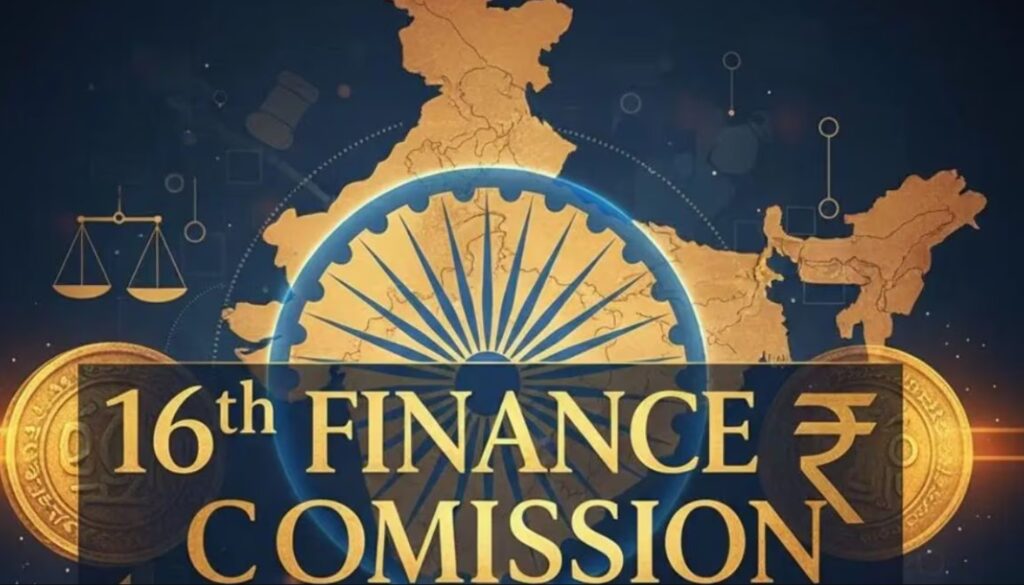
Introduction The Finance Commission is a vital constitutional body that strengthens fiscal federalism in India by ensuring a fair distribution of financial resources between the Centre and the States. The 16th Finance Commission (16th FC) continues this tradition by addressing emerging challenges such as state finances, regional disparities, climate concerns, and governance reforms. For UPSC […]
Union Budget 2026-27: The Three Kartavyas Explained
What was Operation Searchlight? Operation Searchlight was a planned, ruthless military operation launched by the Pakistan Army on the night of March 25, 1971. Its primary objective was to crush the Bengali nationalist movement in East Pakistan (now Bangladesh) by arresting or eliminating political leaders, intellectuals, and student activists who were demanding autonomy and democratic […]
World Bank’s $830 Million Support for PM-SETU Explained
Introduction In a major boost to India’s urban governance and infrastructure development, the World Bank has approved $830 million in financial assistance for the Prime Minister’s Sustainable and Efficient Transport Programme (PM-SETU). The initiative aims to transform urban mobility systems by promoting sustainable, inclusive, and efficient transport solutions. For UPSC and KAS aspirants, this development […]
Solid Waste Management Rules 2026 for UPSC
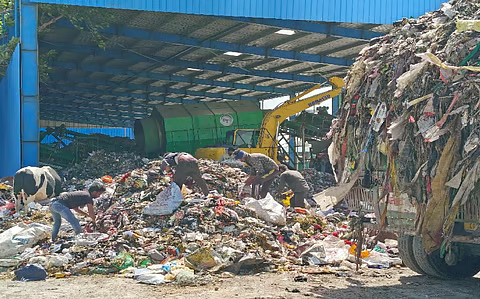
Introduction Rapid urbanisation, lifestyle changes, and increased consumption have led to a sharp rise in solid waste generation in India. Inefficient waste handling has caused severe environmental and public health challenges. To address these issues, the Government of India introduced the Solid Waste Management (SWM) Rules, 2026, strengthening and updating the framework laid down in […]
DRDO’s SFDR Technology Milestone Explained for UPSC
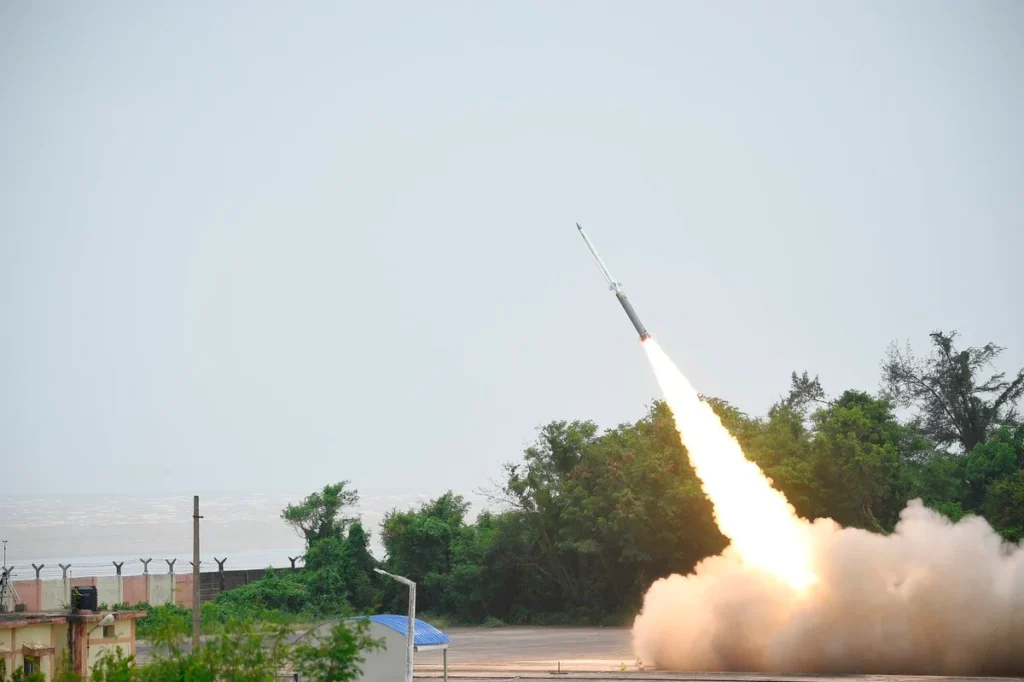
Introduction India’s pursuit of strategic autonomy in defence technology has reached a major milestone with the successful development of SFDR (Solid Fuel Ducted Ramjet) technology by the Defence Research and Development Organisation (DRDO). This breakthrough significantly enhances India’s missile capability, especially in long-range air-to-air combat, and is a critical topic for UPSC Prelims and GS […]
Supreme Court on Special Intensive Revision Explained
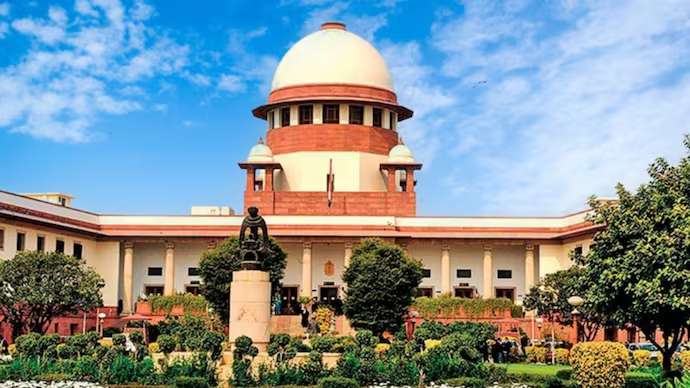
Introduction Free and fair elections are the cornerstone of Indian democracy. The accuracy of electoral rolls plays a critical role in ensuring electoral integrity. In this context, the Special Intensive Revision (SIR) of electoral rolls has repeatedly come under judicial scrutiny. The Supreme Court of India, while hearing petitions related to SIR, has laid down […]
India-U.S. Strategic Trade Deal (The “Grand Bargain”)

Introduction India–U.S. relations have evolved from Cold War distance to a comprehensive strategic partnership. One of the most significant recent developments is the proposed India–U.S. Strategic Trade Deal, often described by analysts as a “Grand Bargain.” This deal aims to align trade, technology, defence, and supply chains, marking a shift from transactional engagement to long-term […]