The Census of India 2027 marks a historic transition from traditional paper-based enumeration to a digital-first census model. Conducted after a long gap since Census 2011, this census is expected to redefine data collection, governance planning, and policy formulation in India.
For UPSC and KAS aspirants, Census 2027 is a crucial topic under Polity, Governance, Social Justice, and Digital India initiatives.
Under the mentorship of Dr. Ramanna Gowda, we have broken down the core differences that every aspirant must know for the upcoming KPSC and UPSC mains.
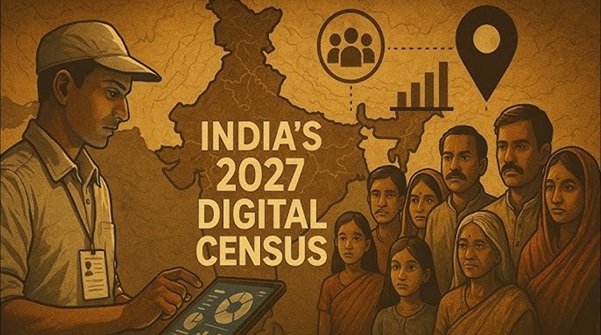
A Census is the official, periodic count of a country’s population along with socio-economic and demographic data such as:
Population size and growth
Literacy and education levels
Housing conditions
Occupation and migration
Social composition
In India, the Census is conducted under the Census Act, 1948, and is a key input for policy planning and resource allocation.
Census 2027 is significant due to:
Use of mobile applications and tablets by enumerators
Real-time data upload to secure servers
Reduced paperwork and manual errors
Citizens may be allowed to self-enumerate online
Enhances participation and convenience
Reduces enumerator workload
In-built validation checks
Geo-tagging of households
Faster correction of inconsistencies
Reduced time between data collection and publication
Early availability of provisional data for policymakers
Census is mentioned in Union List (Entry 69) under the Seventh Schedule
Conducted by the Registrar General and Census Commissioner of India
Provides legal framework for data collection
Ensures confidentiality of individual information
Penal provisions for data misuse
Census data plays a critical role in:
Delimitation of constituencies
Allocation of Parliamentary and Assembly seats
Distribution of central funds and welfare schemes
Evidence-based policymaking
Urban and rural development planning
Limited digital literacy in rural and remote areas
Unequal access to smartphones and internet
Concerns over misuse of personal data
Need for strong cybersecurity frameworks
Risk of exclusion of vulnerable groups
Dependence on digital infrastructure
States play a major role in enumeration
Coordination between Centre and States
Enhances cooperative federalism in governance
Census Act, 1948
Registrar General of India
Digital governance initiatives
GS Paper II: Governance, e-Governance, Social Justice
GS Paper III: Digital infrastructure, data management
Essay: Data-driven governance in India
Importance of census data for administration
Digital governance vs privacy concerns
Strengthening digital infrastructure
Awareness campaigns for public participation
Robust data protection mechanisms
Training enumerators in digital tools
Census 2027 represents a transformative shift in India’s governance ecosystem by embracing a digital-first approach. While it promises efficiency, accuracy, and speed, its success will depend on inclusive implementation, data security, and citizen trust.
For civil services aspirants, understanding Census 2027 is essential to grasp India’s evolving governance framework and the future of evidence-based policymaking.
Stay updated with the latest in Indian Governance and Economy. Our classroom programs and test series are meticulously updated to include these recent legislative changes.
Visit us: www.amoghavarshaiaskas.in
Expert Mentorship: Dr. Ramanna Gowda
Call for Admissions: +91 9916766911
Location: Bangalore, Karnataka.
Maximize the benefits of mock tests for IAS and KAS preparation with guidance from Amoghavarsha IAS Academy . For more details, visit https://amoghavarshaiaskas.in/.
Youtube: click here


Amoghavarsha IAS/KAS Academy was founded in 2014 since from their we have been excellence in the field of civil Service examination preparation and state services. The Academy is completely dedicated to provide excellent quality education by experts and bringing innovations etc.
Copyright © 2014 – 2024 Amoghavarsha IAS Academy. All Rights Reserved
Developed & Maintained by BIGGSITE– Manikanta G.V
Amoghavarsha E Magazine
Current Affairs ( Prelims )
UPSC
KPSC