
India continues to strengthen its commitment to wetland conservation with the inclusion of Chhari-Dhand Wetland as its newest Ramsar Site. This recognition under the Ramsar Convention on Wetlands highlights India’s growing focus on protecting ecologically sensitive areas and biodiversity hotspots.
For UPSC and KAS aspirants, this topic is important for Environment & Ecology, Geography, and Current Affairs.
Under the mentorship of Dr. Ramanna Gowda, we have broken down the core differences that every aspirant must know for the upcoming KPSC and UPSC mains.
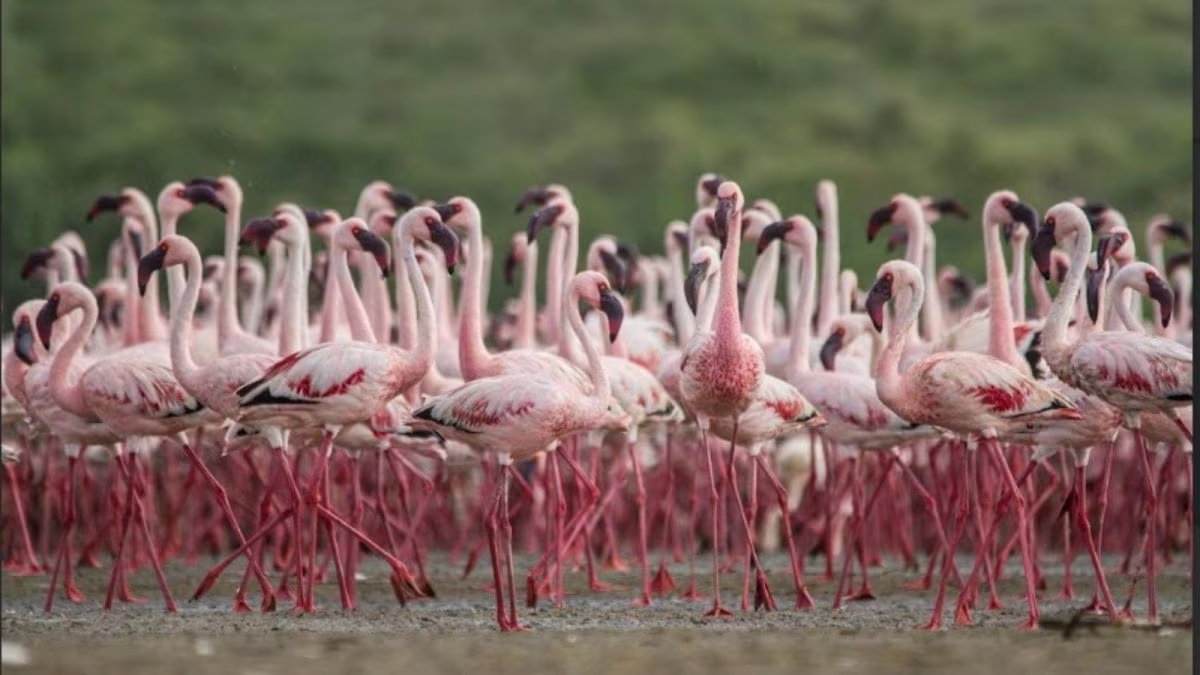
Location: Gujarat
Type: Seasonal saline wetland
Landscape: Part of a semi-arid ecosystem
Hydrology: Receives water mainly from rainfall and surface runoff
The wetland is known for its unique saline conditions and its role as a critical habitat for migratory and resident bird species.
Supports thousands of migratory birds during winter
Includes species such as:
Flamingos
Pelicans
Ducks and waders
Supports aquatic plants, plankton, and invertebrates
Acts as a breeding and feeding ground for birds
Helps in groundwater recharge
Moderates local micro-climate
Acts as a carbon sink
Adopted in 1971 at Ramsar, Iran
India became a signatory in 1982
Focuses on wise use and conservation of wetlands
Sites are selected based on ecological, botanical, zoological, and hydrological importance
Chhari-Dhand Wetland fulfills Ramsar criteria due to its international importance for bird populations and its fragile ecosystem.
The Ramsar designation:
Provides international recognition
Strengthens legal and conservation protection
Promotes sustainable tourism
Encourages community participation
Enhances scientific research and monitoring
Despite its importance, the wetland faces challenges such as:
Climate variability and erratic rainfall
Salinity imbalance
Encroachment and land-use changes
Disturbance to bird habitats
Integrated wetland management plans
Regulation of nearby land use
Monitoring bird populations
Community-based conservation
Awareness programs
Location of Chhari-Dhand Wetland
Ramsar Convention facts
Wetland types in India
GS Paper III: Environment, biodiversity, conservation
Role of wetlands in climate resilience
International environmental conventions
Importance of wetlands in sustainable development
India’s approach to biodiversity conservation
India has one of the largest networks of Ramsar sites
Wetlands are crucial for:
Flood control
Biodiversity conservation
Livelihood support
The addition of Chhari-Dhand Wetland reflects India’s proactive role in environmental governance.
The designation of Chhari-Dhand Wetland as India’s newest Ramsar site is a significant step towards conserving fragile ecosystems and strengthening biodiversity protection. For civil services aspirants, this development is a classic example of applied environmental policy linking global commitments with local conservation.
Understanding such topics helps aspirants approach environment questions analytically and holistically.
Stay updated with the latest in Indian Governance and Economy. Our classroom programs and test series are meticulously updated to include these recent legislative changes.
Visit us: www.amoghavarshaiaskas.in
Expert Mentorship: Dr. Ramanna Gowda
Call for Admissions: +91 9916766911
Location: Bangalore, Karnataka.
Maximize the benefits of mock tests for IAS and KAS preparation with guidance from Amoghavarsha IAS Academy . For more details, visit https://amoghavarshaiaskas.in/.
Youtube: click here


Amoghavarsha IAS/KAS Academy was founded in 2014 since from their we have been excellence in the field of civil Service examination preparation and state services. The Academy is completely dedicated to provide excellent quality education by experts and bringing innovations etc.
Copyright © 2014 – 2024 Amoghavarsha IAS Academy. All Rights Reserved
Developed & Maintained by BIGGSITE– Manikanta G.V
Amoghavarsha E Magazine
Current Affairs ( Prelims )
UPSC
KPSC