Kerala has made a pioneering move by declaring Streptomyces as its State Microbe, becoming the first Indian state to officially recognize a microorganism as a state symbol. This step highlights the growing importance of microbial biodiversity and aligns closely with the global One Health concept, which emphasizes the interconnection between human health, animal health, and environmental health.
For UPSC and KAS aspirants, this topic is highly relevant under Environment & Ecology, Science & Technology, Public Health, and Governance.
Under the mentorship of Dr. Ramanna Gowda, we have broken down the core differences that every aspirant must know for the upcoming KPSC and UPSC mains.
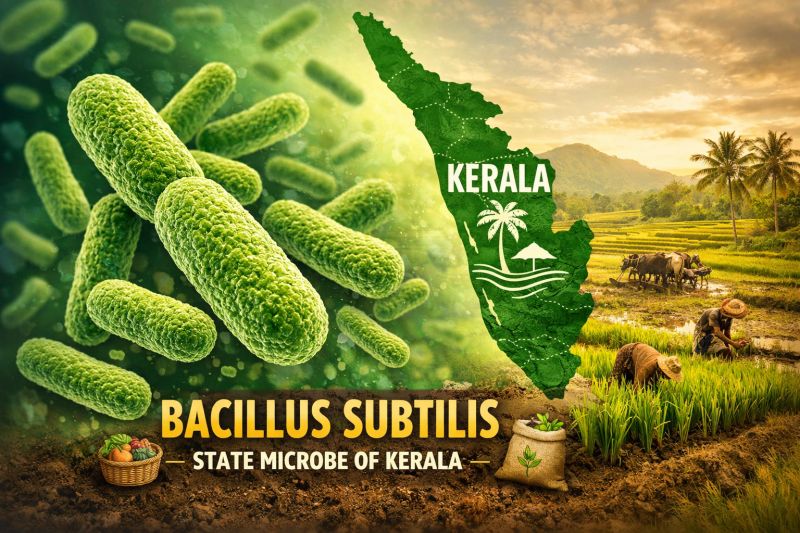
State Microbe: Streptomyces
Nature: Soil-dwelling bacteria
Significance: Major source of antibiotics and bioactive compounds
Streptomyces species are known for producing more than two-thirds of clinically useful antibiotics, including those used to treat bacterial infections.
Kerala selected Streptomyces due to its:
Abundant presence in Kerala’s rich soil ecosystems
Critical role in antibiotic production
Contribution to soil health and nutrient cycling
Potential in biotechnology and pharmaceutical research
This decision also helps raise awareness about antimicrobial resistance (AMR) and the need for sustainable drug discovery.
Declaring a state microbe helps to:
Promote scientific awareness among the public
Encourage research and innovation
Highlight the importance of microbial diversity
Integrate biodiversity conservation with health policies
It reflects a shift from focusing only on visible biodiversity to recognizing microscopic life forms essential for ecosystems and human survival.
One Health is an integrated approach that recognizes the interdependence of human, animal, and environmental health. It promotes collaborative efforts across disciplines to achieve optimal health outcomes.
Human Health: Disease prevention, public health systems
Animal Health: Zoonotic disease control, veterinary care
Environmental Health: Ecosystem stability, biodiversity conservation
The declaration of Streptomyces aligns with One Health in several ways:
Healthy soil microbes improve environmental health
Antibiotic-producing microbes support human and animal health
Sustainable use of microbes helps combat antimicrobial resistance
Protecting microbial diversity ensures long-term ecosystem resilience
Thus, microbial conservation becomes a foundation for holistic health governance.
Overuse of antibiotics in humans and livestock accelerates AMR
Environmental contamination spreads resistant microbes
One Health promotes coordinated action to address AMR
Kerala’s initiative brings attention to responsible antibiotic use and the need for innovation in drug discovery.
Streptomyces characteristics
One Health definition
Antimicrobial resistance basics
GS Paper III: Science & Technology, Environment, Public Health
Role of biodiversity in healthcare
One Health approach in disease prevention
Importance of microbial diversity
Integrated health governance models
Sets a precedent for other states
Strengthens India’s commitment to One Health
Encourages integration of science, policy, and environment
Supports Sustainable Development Goals (SDGs), especially SDG 3 & SDG 15
Kerala’s declaration of Streptomyces as its State Microbe is a visionary step that brings microbial biodiversity into mainstream governance. When viewed through the lens of the One Health concept, it underscores the need for integrated, science-based approaches to health, environment, and sustainability.
For civil services aspirants, this topic exemplifies how innovative policy decisions can bridge ecology, public health, and governance—a core requirement for future administrators.
Stay updated with the latest in Indian Governance and Economy. Our classroom programs and test series are meticulously updated to include these recent legislative changes.
Visit us: www.amoghavarshaiaskas.in
Expert Mentorship: Dr. Ramanna Gowda
Call for Admissions: +91 9916766911
Location: Bangalore, Karnataka.
Maximize the benefits of mock tests for IAS and KAS preparation with guidance from Amoghavarsha IAS Academy . For more details, visit https://amoghavarshaiaskas.in/.
Youtube: click here


Amoghavarsha IAS/KAS Academy was founded in 2014 since from their we have been excellence in the field of civil Service examination preparation and state services. The Academy is completely dedicated to provide excellent quality education by experts and bringing innovations etc.
Copyright © 2014 – 2024 Amoghavarsha IAS Academy. All Rights Reserved
Developed & Maintained by BIGGSITE– Manikanta G.V
Amoghavarsha E Magazine
Current Affairs ( Prelims )
UPSC
KPSC