Rapid urbanisation, lifestyle changes, and increased consumption have led to a sharp rise in solid waste generation in India. Inefficient waste handling has caused severe environmental and public health challenges. To address these issues, the Government of India introduced the Solid Waste Management (SWM) Rules, 2026, strengthening and updating the framework laid down in the SWM Rules, 2016. These rules aim to promote scientific waste management, circular economy, and sustainable urban governance, making them highly relevant for UPSC Prelims and GS Paper III (Environment).
Under the mentorship of Dr. Ramanna Gowda, we have broken down the core differences that every aspirant must know for the upcoming KPSC and UPSC mains.
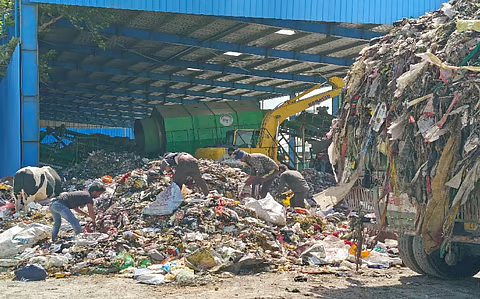
The Solid Waste Management Rules, 2026 are notified under the Environment (Protection) Act, 1986. They provide comprehensive guidelines for the segregation, collection, processing, recycling, and disposal of solid waste generated from households, commercial establishments, institutions, and public spaces.
The focus has shifted from mere disposal to resource recovery and waste minimisation.
Waste generators must segregate waste into:
Biodegradable waste
Dry recyclable waste
Domestic hazardous waste
Non-compliance may attract user fees or penalties.
ULBs are responsible for:
Door-to-door waste collection
Establishing waste processing facilities
Scientific landfill management
Public awareness campaigns
Producers and brand owners must:
Take responsibility for post-consumer waste
Ensure recycling and safe disposal
Reduce excessive packaging
UPSC Link: Sustainable production and consumption.
The rules encourage:
Composting and biomethanation
Waste-to-energy plants
Refuse Derived Fuel (RDF)
This reduces landfill pressure and generates economic value.
The rules recognise the role of:
Waste pickers
Scrap dealers
They aim to integrate them into formal systems, ensuring livelihood security and social justice.
Digital tracking of waste generation
Transparent reporting mechanisms
Performance audits of ULBs
Reduced soil and water pollution
Lower greenhouse gas emissions
Conservation of natural resources
Improved public health
Cleaner urban environments
Employment generation in recycling sector
The influx of refugees and the destabilization of India’s eastern borders eventually led to India’s military intervention in December 1971. The 13-day Indo-Pak War ended with the Surrender of Pakistan on December 16, 1971, leading to the formal creation of Bangladesh.
Strengthen behavioural change communication
Promote public-private partnerships
Invest in decentralised waste management
Ensure strict monitoring and enforcement
The Solid Waste Management Rules, 2026 mark a significant step towards sustainable waste governance in India. By focusing on segregation, recycling, accountability, and inclusion, the rules align with India’s commitments to environmental protection and sustainable development. For UPSC aspirants, this topic is crucial for linking environment, governance, and social responsibility.
Stay updated with the latest in Indian Governance and Economy. Our classroom programs and test series are meticulously updated to include these recent legislative changes.
Visit us: www.amoghavarshaiaskas.in
Expert Mentorship: Dr. Ramanna Gowda
Call for Admissions: +91 9916766911
Location: Bangalore, Karnataka.
Maximize the benefits of mock tests for IAS and KAS preparation with guidance from Amoghavarsha IAS Academy . For more details, visit https://amoghavarshaiaskas.in/.
Youtube: click here

Amoghavarsha IAS/KAS Academy was founded in 2014 since from their we have been excellence in the field of civil Service examination preparation and state services. The Academy is completely dedicated to provide excellent quality education by experts and bringing innovations etc.
Copyright © 2014 – 2024 Amoghavarsha IAS Academy. All Rights Reserved
Developed & Maintained by BIGGSITE– Manikanta G.V
Amoghavarsha E Magazine
Current Affairs ( Prelims )
UPSC
KPSC